An IT maintenance contract does not guarantee that your business is protected.
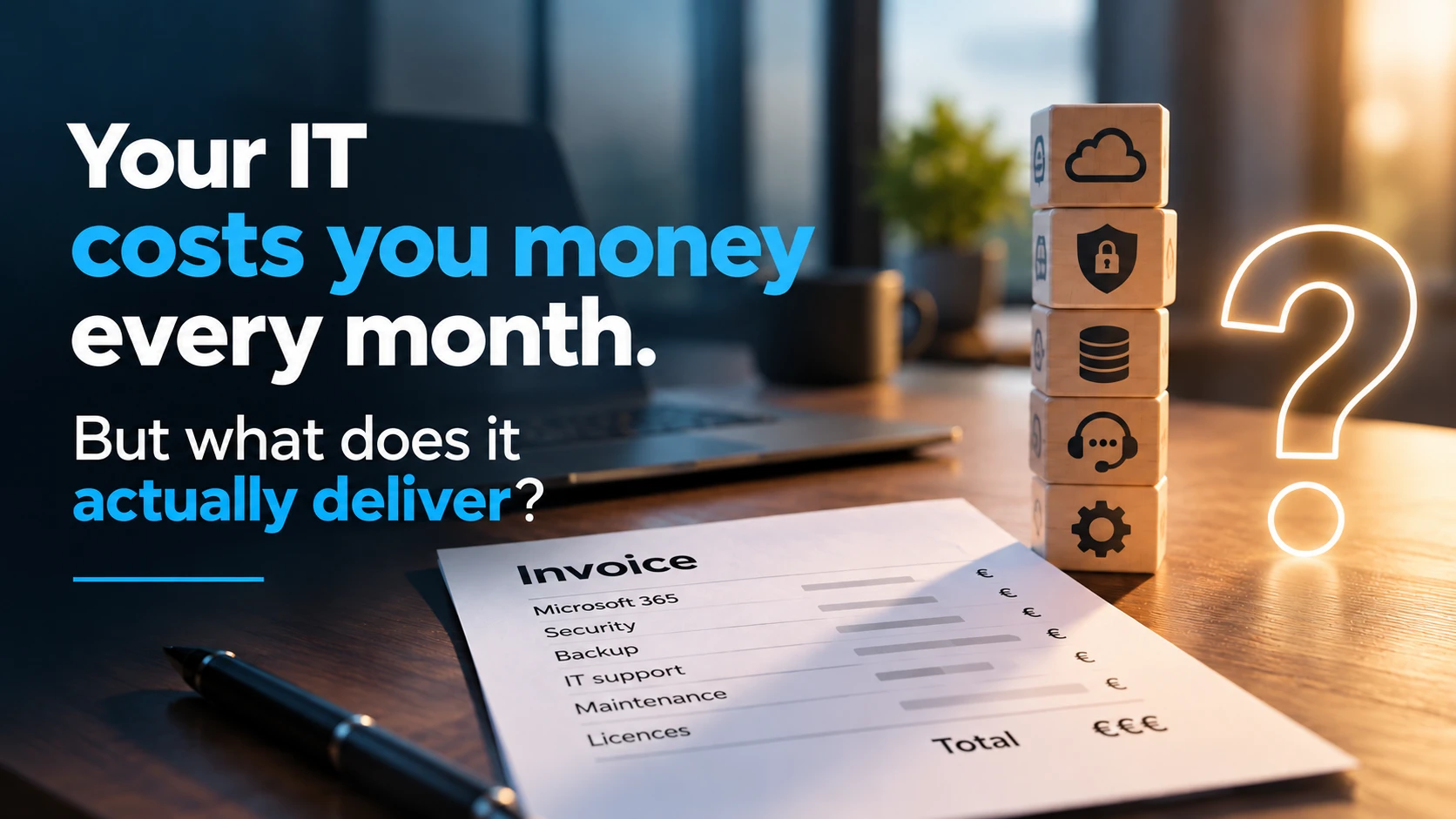
Every month, thousands of SMEs pay for their Microsoft 365 licences, security solutions, backups and IT support contract.
The invoices arrive, the services run and employees get on with their work.
Everything seems under control.
But a closer look raises an essential question: what does your IT budget actually cover?
1. Paying for a service does not mean receiving protection
Consider a few practical examples.
You pay for Microsoft 365. Are your data backed up independently, and can they be restored after an incident?
You have antivirus software or an EDR solution. Who monitors the alerts? Who acts when a threat is detected?
You have a backup solution. When was the last restore test carried out?
You have a maintenance contract. Does your provider act only when you report a problem, or do they also anticipate incidents?
Having the tools is one thing. Configuring them, monitoring them and checking their effectiveness is another.
That is precisely the difference between IT that simply works and IT that is genuinely under control.
2. IT maintenance: what does your contract actually include?
Behind terms such as 'maintenance', 'managed IT' or 'unlimited support', the services provided can vary considerably.
Some contracts mainly cover user assistance and incident resolution.
Others include proactive monitoring, update management, cybersecurity oversight, backup, documentation and strategic guidance.
These two approaches meet different needs.
And, above all, they do not provide the same level of risk control.
A business leader should be able to establish precisely:
- Which services the contract includes and excludes.
- Which equipment, applications and users are covered.
- The support hours and channels.
- The agreed times for starting work and resolving issues.
- The monitoring and preventive measures carried out.
- Responsibilities in the event of a major incident.
An IT contract should not be a technical black box.
3. An SLA is not a guarantee of immediate resolution
This is a distinction I consider particularly important.
A provider may commit to responding to a critical incident within one hour.
But that does not mean the problem will be resolved within one hour.
Three concepts need to be distinguished:
Response time: the time needed to acknowledge a request.
Time to begin work: the point at which someone actually starts dealing with the incident.
Restoration or resolution time: the time needed to restore the service or fix the problem.
For an SME whose operations depend on IT, these differences are far from trivial.
When a server fails, email becomes inaccessible or ransomware stops the business, the operational consequences are what matter.
A contractual commitment must therefore be understandable, measurable and suited to the business's needs.
4. IT security is more than a line on an invoice
A business can have a professional firewall, endpoint protection, multifactor authentication and a backup system.
And still be vulnerable.
Why?
Because security is not just a matter of products.
It is ongoing work that includes:
- Managing and reviewing access permissions.
- Monitoring and responding to alerts.
- Applying security patches.
- Checking equipment configurations.
- Regular restore testing.
- Preparing for incidents and disaster recovery.
- Raising employees' awareness.
Installing a technology does not automatically mean it is performing its role effectively.
You also need processes, clearly defined responsibilities and regular checks.
5. Reporting: knowing what is actually being done
An IT provider should not communicate only when there is an outage, a service visit or an invoice to pay.
They should also be able to provide a regular overview of the IT environment.
Not a 40-page document filled with technical terminology.
A dashboard that management can understand.
For example:
What is the status of the backups and the latest restore tests?
What significant incidents have occurred?
Which vulnerabilities need action?
Which equipment or software is approaching end of life?
What risks have been identified, and which investments take priority?
What improvements have been made since the last review?
This transparency helps business leaders make informed decisions.
It also turns an IT expense into a managed investment.
6. Should your provider be a technician or a partner?
Both.
Technical competence is essential. But it is not always enough to support a business's challenges.
A good IT partner must understand your activities, constraints and priorities.
They must be able to explain why an investment is needed, which risk it helps reduce and what alternatives exist.
They must also be willing to tell you when an additional solution would not deliver real value.
An IT provider's role should not be to multiply licences, tools and subscriptions.
Their role should be to build IT that is reliable, secure, scalable and proportionate to the business's needs.
And that sometimes means simplifying what is already there rather than adding new technology.
7. The five questions I would ask your IT provider
At your next meeting, simply ask these questions:
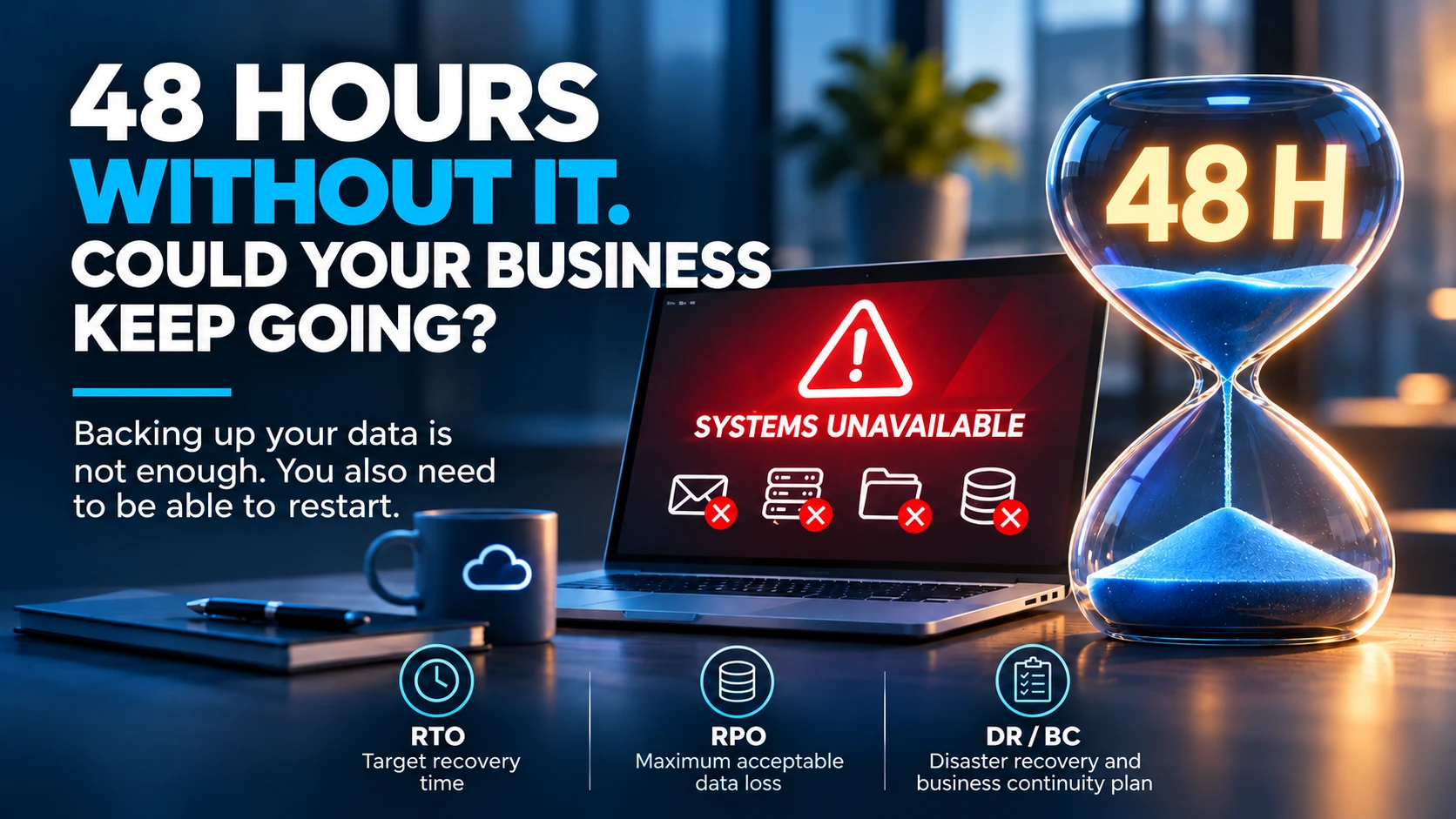
1. If we suffer a major outage tomorrow, how long will it take to resume operations?
2. When did we last test a full restore of our data?
3. What are our business's three main IT risks today?
4. What preventive work do you carry out each month, beyond responding to support requests?
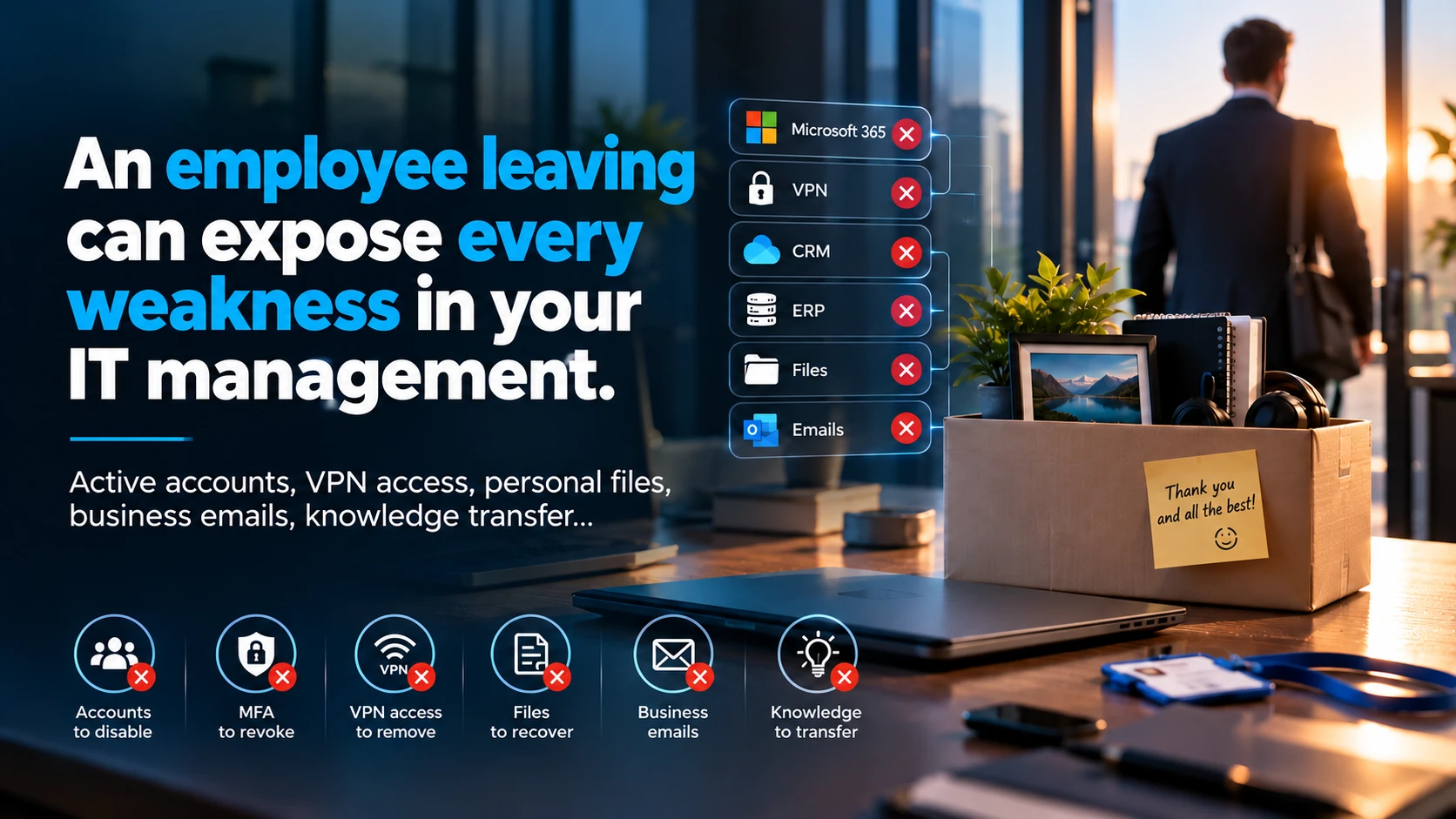
5. If we decide to change provider, do we have all our access credentials, documentation and data?
A responsible provider should be able to answer these questions precisely, distinguishing what has been verified, what is contractually agreed and what still needs improvement.
Conclusion: the real cost of IT is not always on the invoice
In an SME, IT has become essential to almost every function: communication, invoicing, document management, customer relationships and production.
Yet its effectiveness is still too often judged by the amount of a monthly subscription.
Of course, price matters.
But what matters more is what that price actually allows you to guarantee, monitor, anticipate and control.
A business does not necessarily need more tools or services.
It needs to know where it stands, which risks it is taking and who is responsible for what.
You should not pay only for someone to repair your IT when it breaks. You should also know what is being done to prevent it from breaking.
And, above all, be able to verify it.
My approach to IT rests on a simple conviction: transparency, anticipation and an understanding of business challenges are just as important as technical expertise.
Do you know exactly what your IT maintenance contract covers?